
Knowledge About Food Grade Phosphoric acid
Food Grade Phosphoric Acid is Produced exclusively from elemental white phosphorus via the thermal process — the industry benchmark for purity, safety, and consistency in food & beverage manufacturing.
Introduction
Phosphoric acid is one of the most widely used acidulants in the global food and beverage industry — prized for its clean, sharp tartness and remarkable chemical versatility. Yet not all phosphoric acid is created equal. The production route determines, fundamentally and irrevocably, the purity profile and suitability for food contact.
Food grade phosphoric acid of the highest quality is produced exclusively from elemental white phosphorus (P₄) via the thermal process — a route that yields an acid of exceptional clarity and negligible contamination. This technical overview examines the chemistry, manufacturing sequence, quality characteristics, and food-industry applications of thermally produced food grade phosphoric acid, and explains why it represents the gold standard against which all alternatives are measured.
Phosphoric acid (H₃PO₄), also called orthophosphoric acid, is an inorganic mineral acid commercially supplied as a dense, colourless, viscous aqueous solution at 75–85% concentration by weight. Its three ionisable protons — with pKa values of 2.15, 7.20, and 12.35 — make it an outstanding buffering agent across a wide pH range, an attribute extensively exploited in food formulation.
Two Routes, Two Worlds Apart
Industrial phosphoric acid is manufactured by one of two fundamentally different processes. Understanding this distinction is essential for anyone specifying food-grade materials.
Wet Process (from Phosphate Rock)
Treats phosphate rock directly with sulphuric acid. The reaction liberates phosphoric acid but co-extracts every impurity in the ore: fluorides, heavy metals (As, Cd, Pb, Hg), radioactive elements (uranium, radium), and organic contaminants. Even after purification, residual impurities disqualify wet-process acid from food-contact use under most regulatory frameworks.
Thermal Process (from Elemental P₄)
Begins with elemental white phosphorus (P₄) — already separated from all mineral impurities. Combustion and hydration build the acid molecule by molecule. Purity is governed only by the process water quality, not by geological ore chemistry. This is the sole commercially established route for food-grade and pharmacopoeia-grade H₃PO₄.
The thermal process does not merely purify phosphoric acid — it builds it from the ground up, from elemental phosphorus already separated from mineral impurities. The result is an acid whose purity is architectural, not cosmetic.
Principle of Thermal-Route Phosphoric Acid ManufactureManufacturing Process: Step by Step
The thermal manufacture of food grade phosphoric acid proceeds through three clearly defined chemical stages, each tightly controlled and continuously monitored to ensure compliance with food safety specifications.
Production of Elemental White Phosphorus (P₄)
White phosphorus is produced upstream in an electric furnace by carbothermic reduction of calcium phosphate in the presence of silica and coke at temperatures exceeding 1,400 °C. Phosphorus vapour distils from the melt, is condensed under water, and stored as liquid P₄. At this stage, the phosphorus is already separated from calcium, silica, and heavy metals of the ore — the critical purification has, in effect, already occurred. This elemental P₄ is the sole phosphorus-bearing feedstock for the acid plant.
Combustion of P₄ to Phosphorus Pentoxide (P₄O₁₀)
Liquid white phosphorus is vaporised and burnt in a controlled, excess-air combustion chamber. The highly exothermic reaction between P₄ vapour and oxygen produces phosphorus pentoxide (P₄O₁₀), a white hygroscopic solid that immediately forms an aerosol. Combustion temperature is carefully regulated to ensure complete oxidation and prevent formation of the lower oxide P₄O₆, which would introduce impurities into the product stream.
Hydration of P₄O₁₀ to Orthophosphoric Acid (H₃PO₄)
The P₄O₁₀ aerosol enters a hydration tower where it contacts high-purity demineralised water. The exothermic hydration converts the oxide to orthophosphoric acid solution. Heat of hydration is managed by controlled water addition and internal cooling. The resulting acid is collected, concentrated to the desired assay (75–85% H₃PO₄), filtered, and polished through activated carbon to remove any trace colour bodies.
Key Reaction Equations
Quality Specifications
Food grade phosphoric acid from the thermal process is governed by multiple international standards: the Joint FAO/WHO Expert Committee on Food Additives (JECFA), the US Food Chemicals Codex (FCC), EU Regulation EC No. 231/2012, and the US Pharmacopeia (USP). The table below summarises representative parameters for an 85% (w/w) product.
| Parameter | FCC / JECFA Limit | Typical Thermal-Process Value |
|---|---|---|
| Assay H₃PO₄ (w/w) | ≥ 75.0 % | 85.0 ± 0.5 % |
| Arsenic (As) | ≤ 1 mg/kg | < 0.1 ppm |
| Lead (Pb) | ≤ 1 mg/kg | < 0.1 ppm |
| Cadmium (Cd) | ≤ 1 mg/kg | < 0.05 ppm |
| Mercury (Hg) | ≤ 1 mg/kg | < 0.02 ppm |
| Fluoride (F⁻) | ≤ 10 mg/kg | < 1 ppm |
| Sulphate (SO₄²⁻) | ≤ 150 mg/kg | < 25 ppm |
| Chloride (Cl⁻) | ≤ 200 mg/kg | < 10 ppm |
| Iron (Fe) | ≤ 10 mg/kg | < 1 ppm |
| Colour (APHA) | ≤ 20 | < 5 |
| Appearance | Clear, colourless solution | Water-white, mobile liquid |
| Reducing substances | Passes test | Passes |
Key Advantages of the Thermal Process
The thermal process confers a set of intrinsic quality advantages that cannot be replicated by purification of wet-process acid:
Food & Beverage Applications
Food grade phosphoric acid (E338 / GRAS) serves a remarkably broad range of functional roles across the food industry — from acidulation and pH control to emulsification and leavening.
Cola Beverages
The defining acidulant in cola-type drinks, providing characteristic dry, tangy tartness and balancing the sweetness of sugar or HFCS.
Processed Cheese
As phosphate salts, controls casein matrix structure and water retention, ensuring melt properties and extended shelf life.
Confectionery
Controls pH during boiling, catalyses invert sugar formation, and provides the sourness in sour candies and acid drops.
Cured Meats
Phosphate salts improve water-holding capacity, fat emulsification, and texture in hams, sausages, and deli products.
Baking Leavening
Precursor to monocalcium phosphate (MCP), the fast-acting acid component in baking powder and self-raising flour blends.
pH Adjustment
Used to control process pH in fruit juice processing, brewing, fermentation, and acidified food manufacturing.
Safety & Regulatory Status
Phosphoric acid has been used safely in food processing for over a century. The acceptable daily intake (ADI) established by JECFA is “not specified” — reflecting the committee’s conclusion that the substance presents no hazard at levels consistent with its technological function. In the EU, E338 may be used in a wide range of food categories subject to quantum satis (GMP) limits or specific maximum levels depending on application.
Manufacturers of food grade phosphoric acid are expected to operate under ISO 9001 quality management systems and comply with ISO 22000 / FSSC 22000 food safety management requirements. Halal and Kosher certification is readily achievable given the purely inorganic and elemental nature of the feedstock.
Packaging & Storage
Food grade phosphoric acid is commercially available in three standard formats, selected according to customer volume, logistics infrastructure, and storage capability:
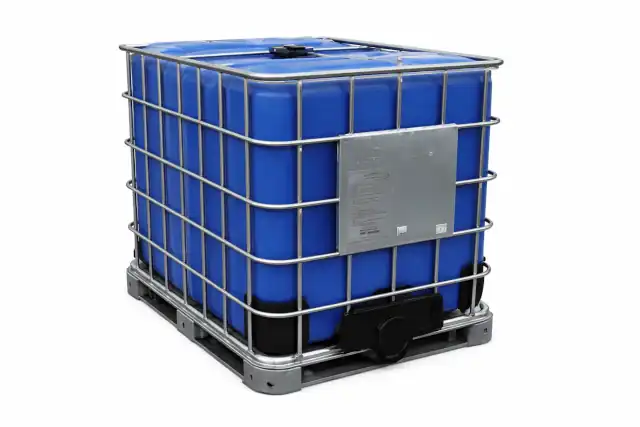
IBC — 1,000 L
HDPE intermediate bulk containers. Standard unit for most food processing customers. Forklift-compatible, single-use or returnable options available.
Bulk Road Tanker
Food-grade rubber-lined or HDPE-lined tankers (20–25 MT) for high-volume users: beverage concentrate manufacturers, large dairy processors.
Drums — 200 L
HDPE drums for smaller operations, laboratory use, and customers requiring flexible quantities without bulk infrastructure investment.
Storage Guidelines
Storage areas must be constructed of acid-resistant materials. The 85% acid (specific gravity ~1.685 g/cm³) must be pumped using acid-duty equipment in polypropylene, PVDF, or SS 316L. Store away from strong bases, oxidisers, and incompatible metals. Recommended storage temperature: 10 °C – 40 °C. Below approximately 18 °C, 85% acid may crystallise; gentle warming restores homogeneity before use.
Phosphoric Acid Food Grade